
Ticket Prices(tax included)
Special Backstage tour +A Seat (1F Reserved seat)
¥27,000
A Seat(1F Reserved seat)
¥13,000
B Seat (1F Reserved seat with a partial view)
¥11,000
Student Seat* (2F Non-Reserved seat)
¥4,000

Program Overview
Day1
Friday, 02 October 2026
Backstage tour
Begins at 5:00 p.m. (doors open 4:30 p.m.)
Duration: 75 minutes
Performance
Begins at 7:00 p.m. (doors open 6:30 p.m.)
Duration: 100 minutes
Program
Introduction talk in English,
Noh Funa Benkei (Benkei in the
boat)
Day2
Wednesday, 21 October 2026
Backstage tour
Begins at 5:00 p.m. (doors open 4:30 p.m.)
Duration: 75 minutes
Performance
Begins at 7:00 p.m. (doors open 6:30 p.m.)
Duration: 90 minutes
Program
Introduction talk in English,
Noh Hagoromo (The Feathered Robe)
Day3
Thursday, 12 November 2026
Backstage tour
Begins at 5:00 p.m. (doors open 4:30 p.m.)
Duration: 75 minutes
Performance
Begins at 7:00 p.m. (doors open 6:30 p.m.)
Duration: 100 minutes
Program
Introduction talk in English,
Noh Funa Benkei (Benkei in the boat)
Day4
Tuesday, 22 December 2026
Backstage tour
Begins at 5:00 p.m. (doors open 4:30 p.m.)
Duration: 75 minutes
Performance
Begins at 7:00 p.m. (doors open 6:30 p.m.)
Duration: 90 minutes
Program
Introduction talk in English,
Noh Hagoromo (The Feathered Robe)
What is Noh?
Here are some of its key features!
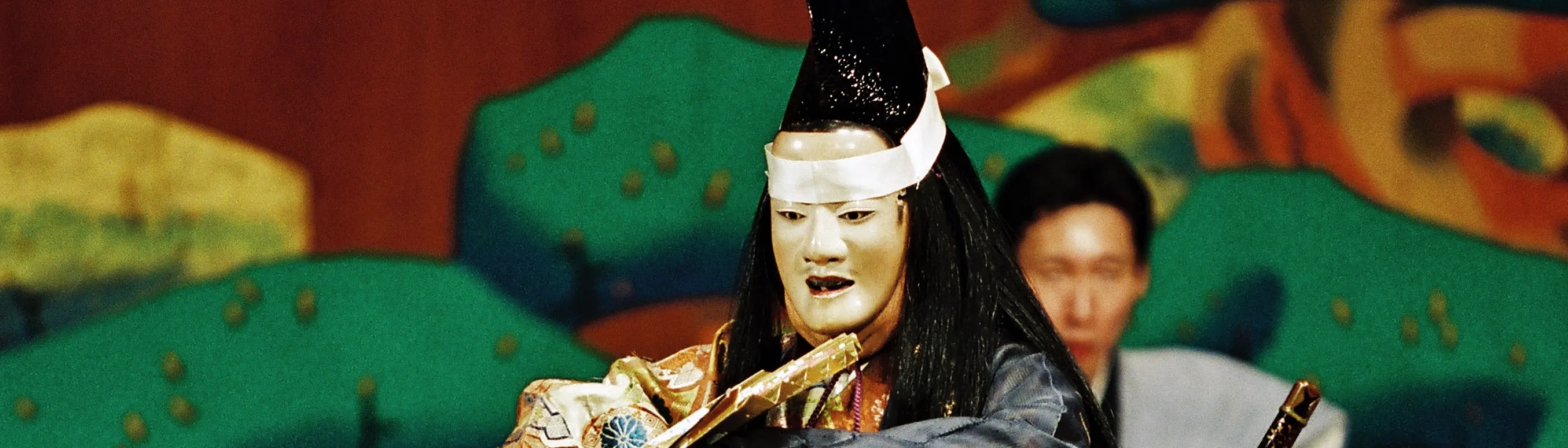
Noh is a classical Japanese performing art that emerged in the fourteenth century and has
been
transmitted continuously to the present day. It has been deeply influential throughout the history of
Japan and has also gained global recognition. In 2001, UNESCO designated noh as a “Masterpiece of the Oral and
Intangible Heritage of Humanity.”
01
Visual and musical art
Noh is a form of “total theatre” that combines visual, musical, and literary elements, offering many ways to appreciate its artistry. Performers wear elegant masks and costumes as they chant or dance to music on stage. The simple yet sophisticated stage presentation of noh continues to inspire artists to this day.
02
Classical literature
Much of the noh repertory draws from ancient and medieval literary works, such as The Tale of Genji, The Tale of the Heike, and The Tales of Ise. Through its lyrical texts that portray these canonical stories, noh offers deep insights into Japanese culture. Many plays are also set in Kyoto, the ancient capital of Japan.
03
Universal stories
The stories of noh unfold through themes shared with theatrical masterpieces across times and cultures, including compassion, sorrow, regret, anger, and joy. These universal themes continue to resonate with contemporary audiences.
Noh is designated as an Intangible Cultural Heritage of Humanity by UNESCO.
Special Program
Limited to 20 persons per session
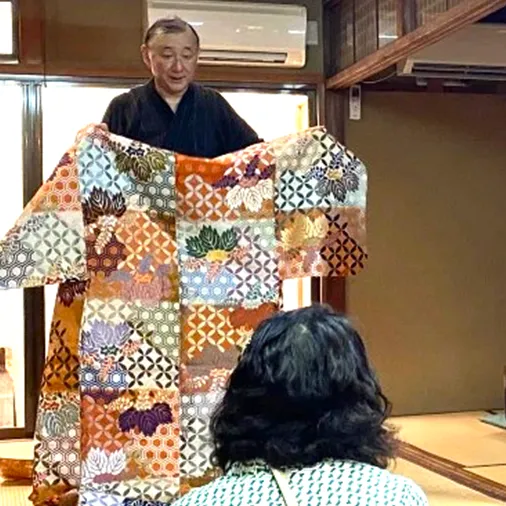
Participants will be able to visit the normally inaccessible backstage area, with expert commentary provided in English.
01
Watch how the performers don precious masks and costumes up close.
02
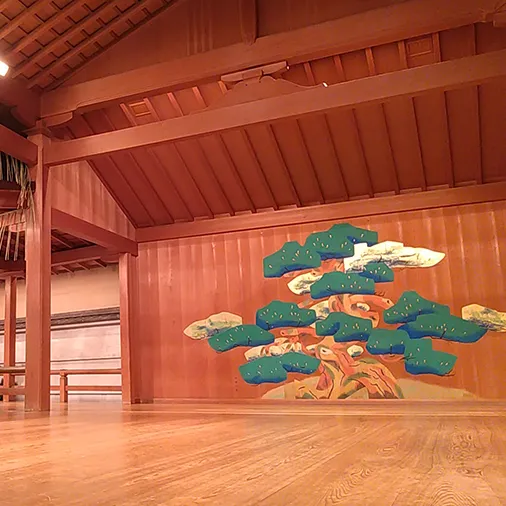
Go on the stage and see the theatre from the performers’ point of view.
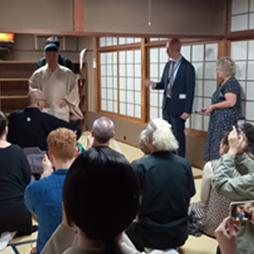
03
You can also take photos.
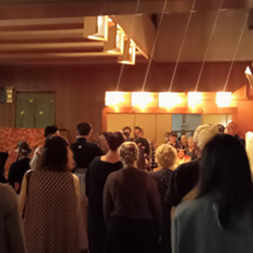
04
Explore the unique backstage practices of noh.
Full Language
Support
English Commentary
Japan-based specialist guides will provide easy to understand explanations in English.



Diego Pellecchia
Diego Pellecchia is associate professor at Kyoto Sangyō University, where he teaches and researches nō theatre. He is a certified instructor of the Kongō school of nō, and a founding member of Discover Noh in Kyoto.
CLOSE

Julia Yamane
Julia Yamane is representative director of Discover Noh in Kyoto, where she organizes and directs activities to promote noh from multicultural perspectives. She is a practitioner of the Kanze School of Noh.
CLOSESubtitles available
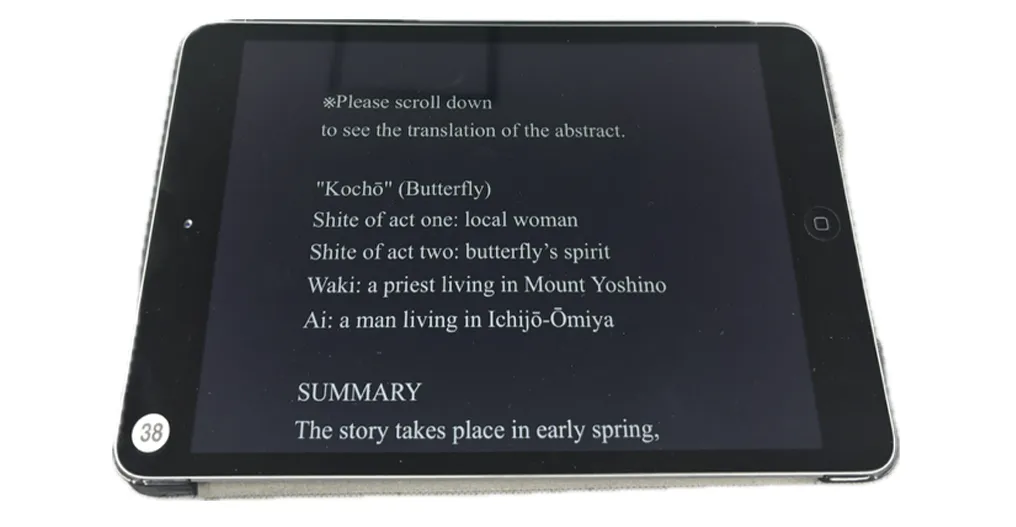
English subtitles will be displayed to provide commentary as the performances unfold. The subtitles will scroll automatically along with the action on stage, making the stories easy to understand, even for beginners. You can view them on a rental tablet or on your smartphone.
Synopsis
Day1, Day3
Funa Benkei(Benkei in the boat)
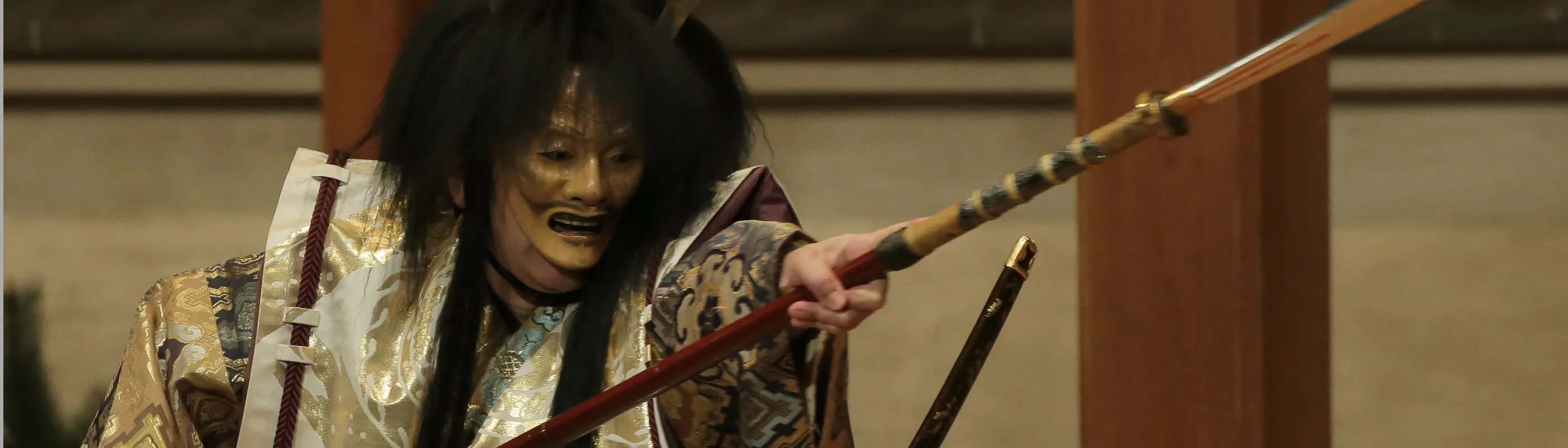
Minamoto no Yoshitsune, the hero of the war between the Minamoto and Taira clans in the twelfth century, flees the capital with his loyal retainers after a conflict with his brother Yoritomo. They reach the Daimotsu Port (Hyogo Prefecture), hoping to escape to the west of the country by sea, but Yoshitsune’s mistress, the famed dancer Lady Shizuka, is forced to return to the capital due to the dangerous sea voyage lying ahead. Before leaving, she performs a dance, praying for Yoshitsune’s military fortune and the brothers’ reconciliation, and tearfully bids him farewell. After Yoshitsune and his party set sail, ghosts of the Taira clan, recently defeated by Yoshitsune in the decisive naval battle, rise from the waves to take their revenge on him. The ghost of the enemy general Tomomori attacks Yoshitsune with a halberd, but Yoshitsune’s retainer, the warrior-monk Benkei, repels him with his spiritual powers. Funa Benkei features contrasting highlights, the graceful dance in the first act and the dynamic battle scene between the general, his retainer and the ghost in the second act.
OPENCLOSE
Day2, Day4
Hagoromo(The Feather Robe)
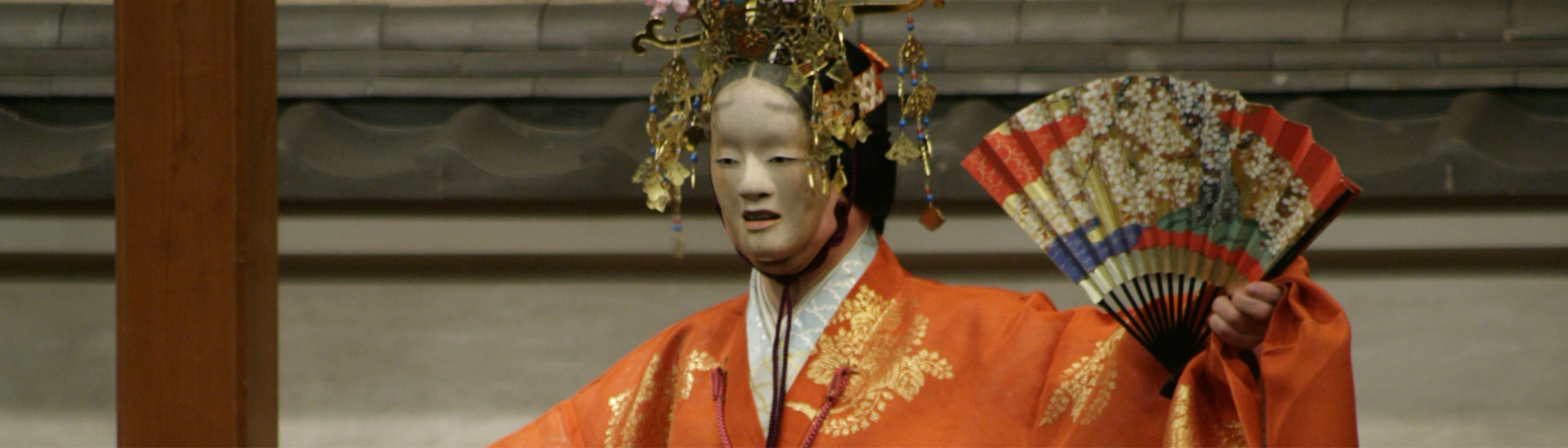
A fisherman at Miho Bay (Shizuoka Prefecture) notices a beautiful robe hanging from the branch of a pine tree and he decides to take it home. Then, a celestial maiden appears and claims the robe is hers. Without it she cannot return to her home in the heavens. The fisherman says that if she performs a dance for which celestial beings are famed, he will return it. The maiden cannot dance without it, but the fisherman fears that if he returns it she will fly away, but the maiden reproaches him, saying , “Doubt belongs to humans; in the heavens there is no deceit.” Ashamed of his suspicion, the fisherman promptly returns the robe. The maiden dons the robe and performs a dance describing the mysterious beauty of the moon, where she resides. As a gesture of gratitude she bestows treasures upon earth, then gradually rises into the sky, circling higher and higher before disappearing into the mist over Mt. Fuji. Hagoromo is a play appreciated for the elegant dance depicting the mythical scenes from the celestial maiden’s legends and has traditionally been performed for celebratory occasions.
OPENCLOSE
Venue
KYOTO KANZE NOH THEATER
44 Okazaki Enshoji-cho, Sakyo-ku, Kyoto 606-8344 Japan

5 minute walk from Exit 1 of Higashiyama Station on the Subway- Tozai Line.
* There is
a paid parking lot next to the Kyoto Kanze Noh Theater, but lots are limited.
* Bicycle parking is located
near the main entrance.
Program Details
Day1
Friday, 02 October 2026
Backstage tour
Limited to the first 20 persons.
Participants will be able to visit the normally inaccessible backstage area, with expert commentary
provided in English.
Performance
-Greetings-
Kawamura Haruhisa
-Introduction-
Diego Pellecchia
<Noh>Funa Benkei
(Benkei in the
boat)
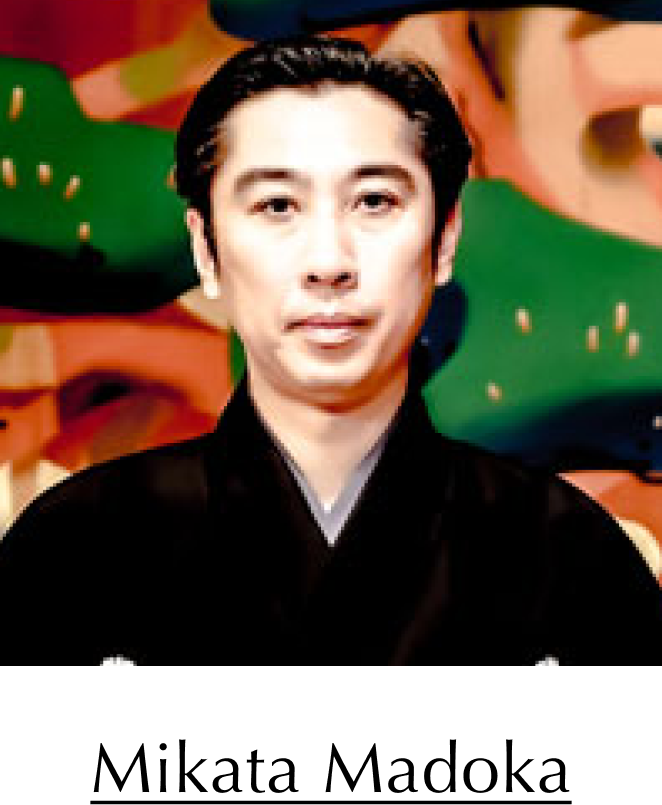
Lady Shizuka: Mikata Madoka
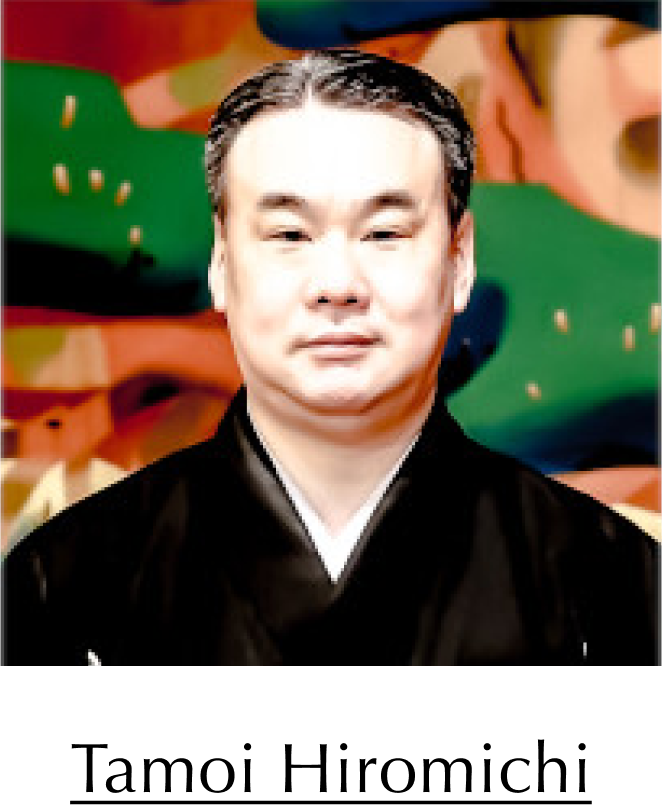
Taira no Tomomori: Tamoi Hiromichi
Yoshitsune: Tamoi Ritsurou
Benkei: Hara Masaru
Boatman: Shigeyama Shigeru
OPENCLOSE
Day2
Wednesday, 21 October 2026
Backstage tour
Limited to 20 persons.
Participants will be able to visit the normally inaccessible backstage area, with expert commentary
provided in English.
Performance
-Greetings-
Kawamura Haruhisa
-Introduction-
Diego Pellecchia
<Noh>Hagoromo
(The Feather Robe)
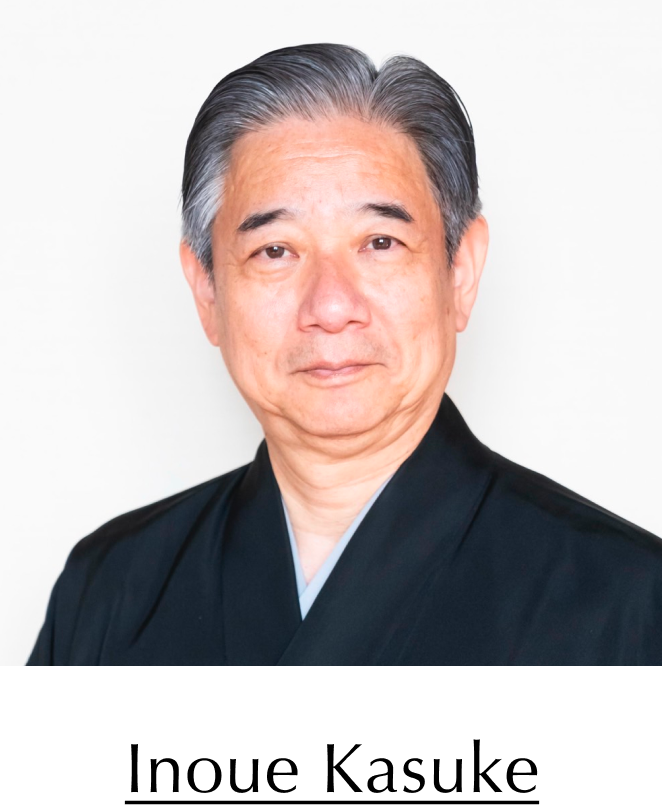
Celestial Maiden: Inoue Kasuke
Fisherman: Fukuo Tomotaka
OPENCLOSE
Day3
Thursday, 12 November 2026
Backstage tour
Limited to 20 persons.
Participants will be able to visit the normally inaccessible backstage area, with expert commentary
provided in English.
Performance
-Greetings-
Kawamura Haruhisa
-Introduction-
Julia Yamane
<Noh>Funa Benkei
(Benkei in the boat)
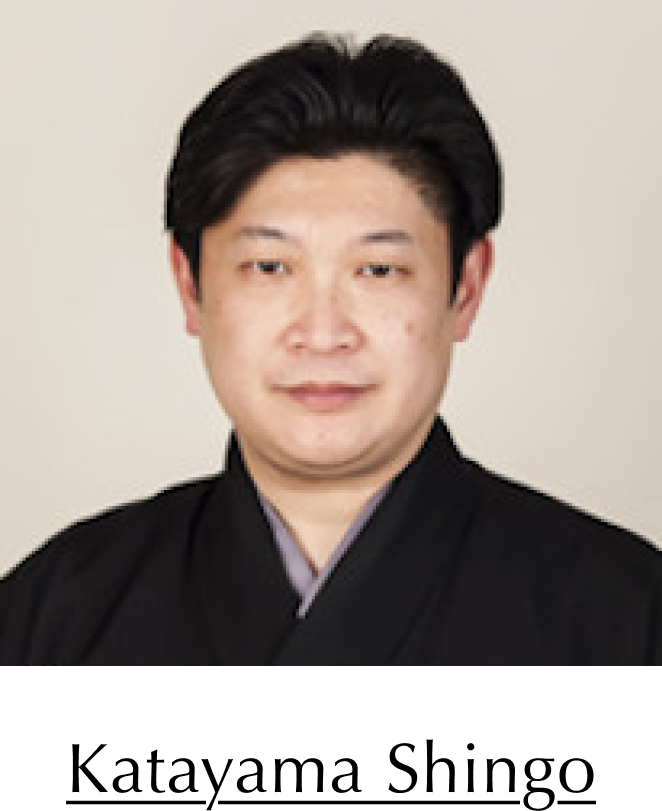
Lady Shizuka: Katayama Shingo
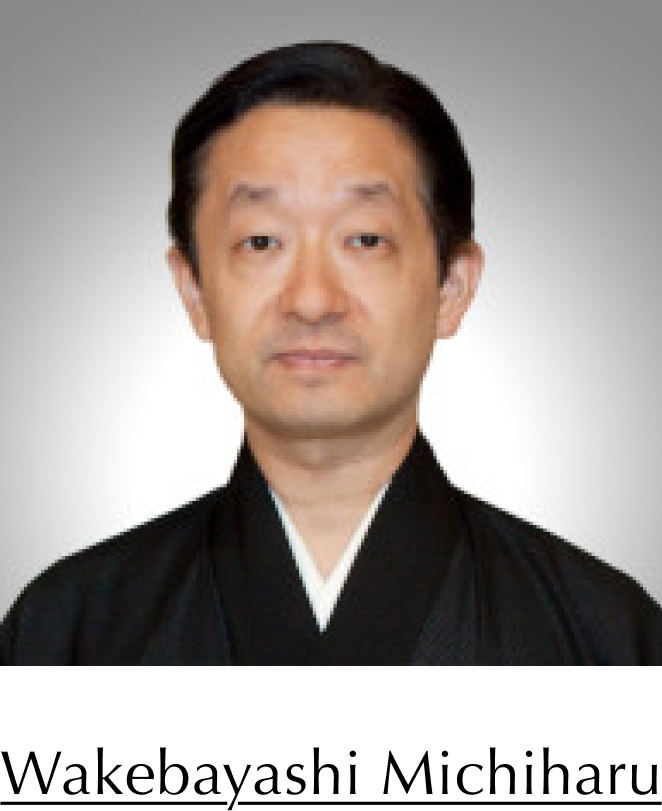
Taira no Tomomori: Wakebayashi Michiharu
Yoshitsune: Tamoi Ritsurou
Benkei: Arimatsu Ryoichi
Boatman: Shigeyama Senzaburo
OPENCLOSE
Day4
Tuesday, 22 December 2026
Backstage tour
Limited to 20 persons.
Participants will be able to visit the normally inaccessible backstage area, with expert commentary
provided in English.
Performance
-Greetings-
Kawamura Haruhisa
-Introduction-
Julia Yamane
<Noh>Hagoromo
(The Feather Robe)
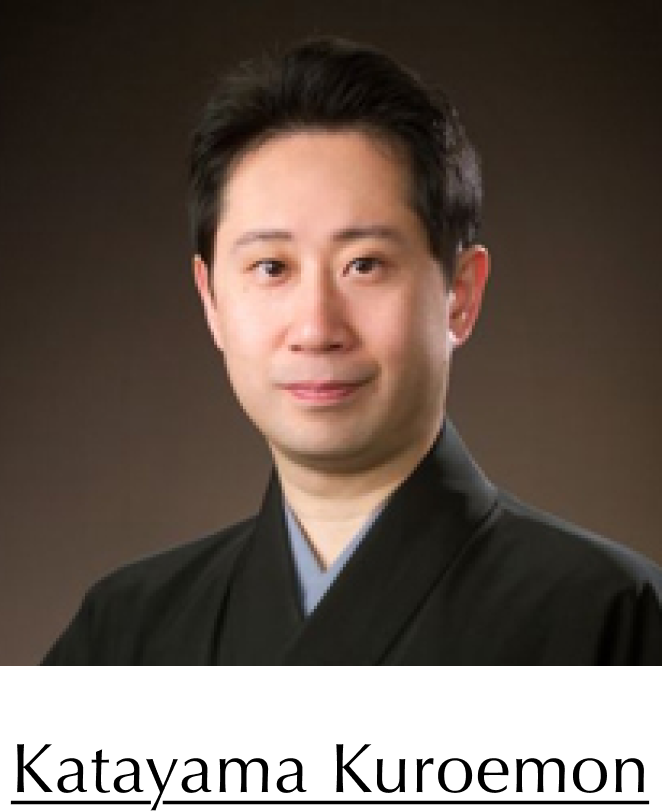
Celestial Maiden: Katayama Kuroemon
Fisherman: Hosho Kinya
OPENCLOSE
Performers
Ticket Prices(tax included)
Special Backstage tour +A Seat (1F Reserved seat)
¥27,000
A Seat(1F Reserved seat)
¥13,000
B Seat (1F Reserved seat with a partial view)
¥11,000
Student Seat* (2F Non-Reserved seat)
¥4,000
* Student seats require a student ID to be presented at admission. Only students of graduate schools, universities, vocational schools, high schools, junior high schools, and elementary schools in Japan and abroad are eligible.
Online Booking
Click the button below to book tickets.
* Choose your preferred date on the booking page.
Payment is possible with the following credit cards: JCB, VISA, Master and AMERICAN EXPRESS.

Contact Us
You can contact us by email.

Request to
Customers
Food and beverages are not allowed in the theater
Photography, audio recording, or video recording is not allowed during performances
Please turn off cell phones and other electronic devices that emit sound or light during performances
Performers and other details are subject to change
You may be asked to leave if you disturb other guests
Thank you in advance for your cooperation
About
KYOTO KANZE
NOH THEATER
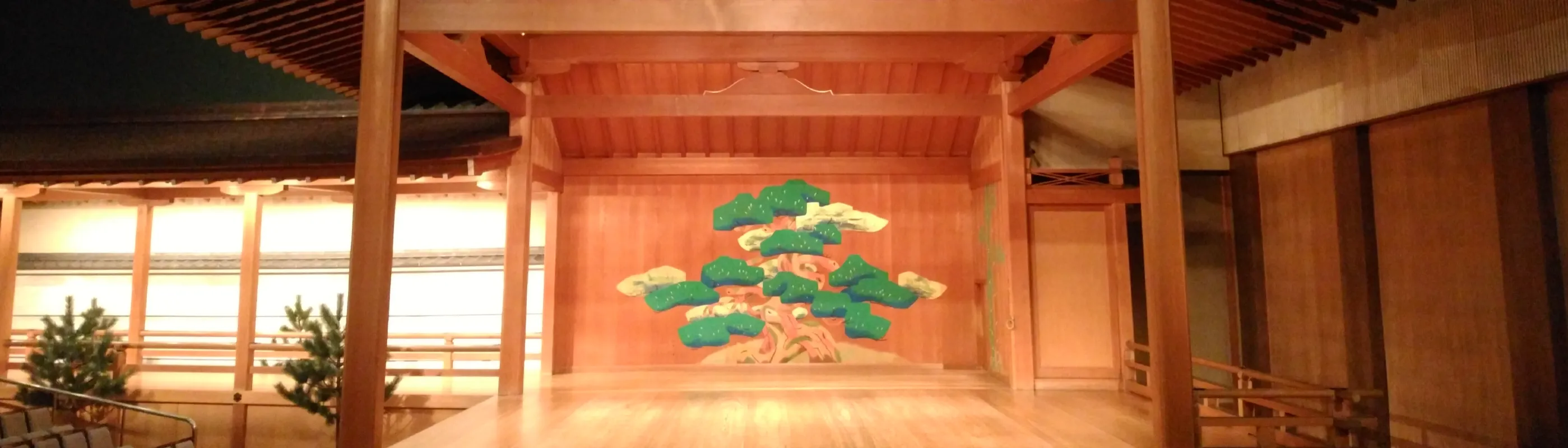
The KYOTO KANZE NOH THEATER is the largest noh theater in Kyoto, with a capacity of 500 seats. It is the home of Kyoto’s Kanze School of Noh and hosts numerous noh performances throughout the year. The pine tree on the kagami-ita wall was painted by the Japanese painter Inshō Dōmoto.

Presented by Kyoto Kanze Kai
Supported by Discover Noh in Kyoto